




Flight to Safety in Crypto
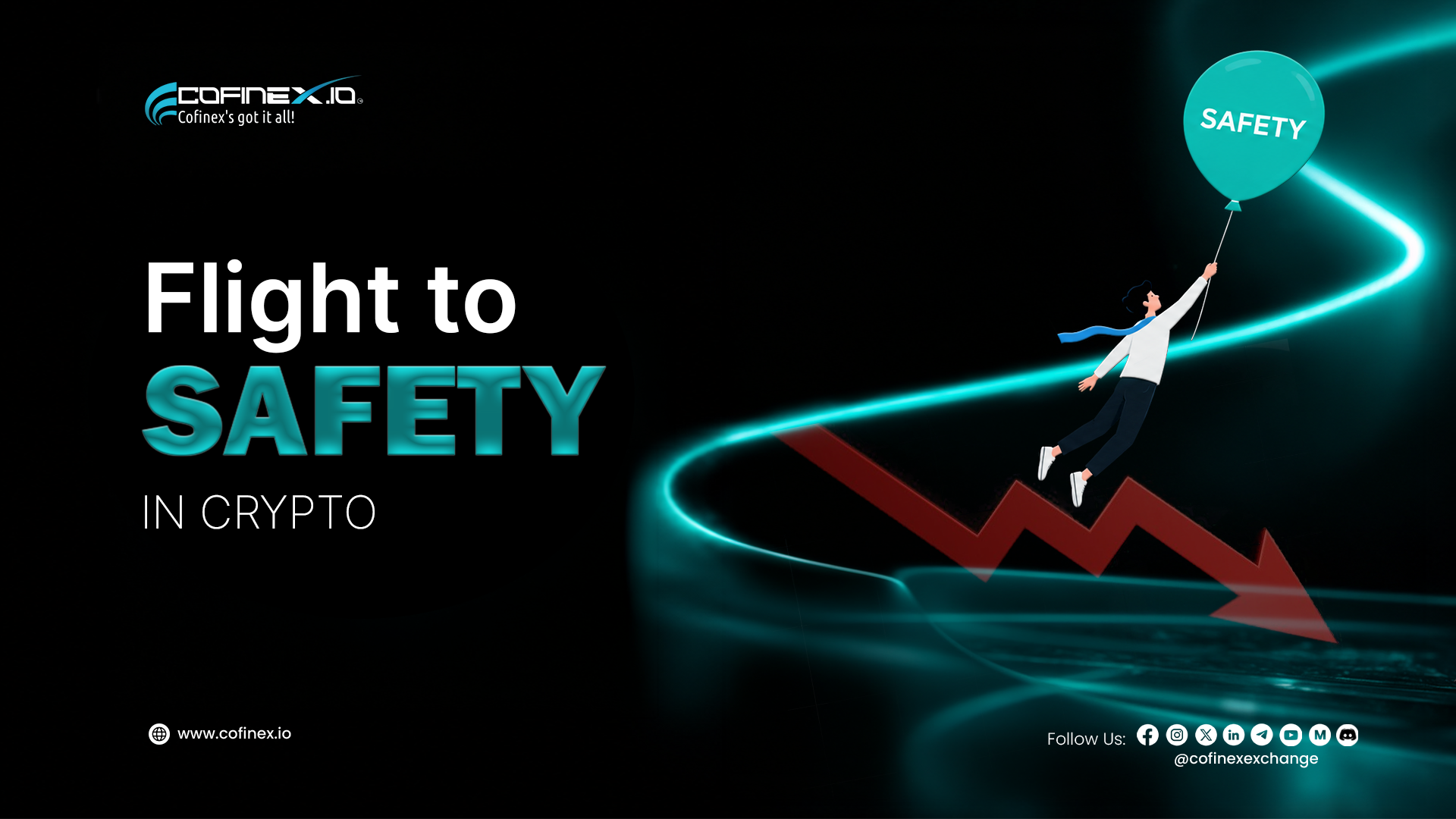
Crypto markets can move quickly. When uncertainty increases, investors may start becoming more cautious about risk.
Some may reduce their exposure to highly volatile cryptocurrencies and move their funds toward assets they consider relatively more stable or liquid.
This behavior is known as a flight to safety in crypto.
But what does it mean in crypto, and where can investors move their money?
What is a Flight to Safety in Crypto?
A flight to safety happens when investors become more cautious during periods of uncertainty.
Instead of taking the same level of risk, they may move money away from assets they consider riskier and toward assets they perceive as offering greater stability or liquidity.
In crypto, this movement can take different forms:
Altcoins → Bitcoin
Volatile crypto assets → Stablecoins
Crypto → Fiat currency
The important point is that a flight to safety in crypto does not mean every investor sells. It describes a shift in behavior among some market participants who want to reduce their perceived risk.
Why does it happen in Crypto?
Cryptocurrency markets can experience significant volatility, so changes in market sentiment can affect investor behavior quickly.
A flight to safety may occur during periods of uncertainty caused by factors such as:
- Sharp market declines
- Regulatory developments
- Security incidents
- Economic uncertainty
- High market volatility
- Changes in investor sentiment
When uncertainty rises, some investors may choose to reduce their exposure to higher-risk assets rather than continue taking the same level of risk.
Where can Investors move their money?
There is no single destination during a flight to safety. The choice depends on the investor, their risk tolerance, and the market environment.
Bitcoin
Some investors may move funds from smaller or more volatile cryptocurrencies into Bitcoin.
Bitcoin is a major cryptocurrency with substantial market liquidity, but it remains a volatile asset. Therefore, moving from an altcoin into Bitcoin should not automatically be considered a move into a “safe” asset.
Instead, it may represent a decision to reduce exposure to some of the risks associated with smaller or less liquid cryptocurrencies.
Stablecoins
Stablecoins can also be part of this shift.
For example, a trader holding an altcoin may sell it and hold USDT instead. This can reduce exposure to cryptocurrency price movements while allowing the trader to keep funds within the crypto ecosystem.
However, stablecoins are not risk-free. Their stability can depend on factors such as their design, reserves, liquidity, issuer, and regulatory environment.
Therefore, holding a stablecoin is not the same as holding cash in a bank account.
Fiat Currency
Some investors may choose to leave the crypto market altogether and convert their holdings into fiat currency, such as INR or USD.
This represents a broader reduction in exposure to cryptocurrency price movements.
Is bitcoin a safe-haven asset?
This question does not have a simple answer.
Bitcoin is sometimes discussed as a potential alternative asset or hedge against certain risks. However, Bitcoin can experience large price movements and remains a volatile asset.
During some periods of market stress, Bitcoin can fall alongside other risk assets. In other situations, investors may move from smaller cryptocurrencies into Bitcoin.
So, it is more accurate to describe Bitcoin based on its market characteristics and risks rather than simply calling it a “safe-haven” asset.
Flight to Safety vs. Flight from Crypto
These two terms are related, but they describe different types of behavior.
A flight to safety within crypto means an investor reduces exposure to more volatile crypto assets but continues to hold an asset within the crypto ecosystem.
For example:
Altcoin → USDT
A flight from crypto means an investor reduces their overall exposure to the cryptocurrency market.
For example:
Bitcoin → INR or USD
This distinction matters because money leaving one cryptocurrency does not necessarily mean it has left the entire crypto market.
Does a flight to safety in crypto mean crypto prices will fall?
Not necessarily.
A flight to safety in crypto can contribute to selling pressure in some cryptocurrencies, particularly assets that investors perceive as carrying higher risk. However, cryptocurrency prices are influenced by many factors, including supply and demand, liquidity, market sentiment, economic conditions, and new information.
Capital can also move from one crypto asset to another instead of leaving the market completely.
For this reason, a risk-off period should not automatically be interpreted as a complete exit from crypto.
Why does this matter?
Understanding flight-to-safety behavior can help explain what is happening beneath the surface of the crypto market.
Instead of looking only at whether prices are rising or falling, investors can also consider where capital may be moving.
For example, movement from more volatile cryptocurrencies toward stablecoins may indicate that some market participants are trying to reduce exposure to crypto price volatility.
Similarly, movement from smaller cryptocurrencies into Bitcoin may indicate a preference for a more established and liquid cryptocurrency within the market.
These movements can provide useful context when assessing changes in market sentiment, although they do not guarantee what prices will do next.
Final Thoughts
A flight to safety is a shift in investor behavior that can occur when uncertainty increases and some investors want to reduce their perceived risk.
In crypto, this can involve moving from more volatile assets toward Bitcoin, stablecoins, or fiat currency.
However, “safer” does not mean “risk-free.” Bitcoin remains volatile, stablecoins have their own risks, and market conditions can change quickly.
Understanding where investors may be moving their capital can provide useful context for interpreting crypto-market behavior.
The key question is not simply “Are crypto prices going up or down?”
It is also:
“How are investors responding to changing levels of risk?”
Trade on the Go with the Cofinex Mobile App
Follow Cofinex
Telegram: https://t.me/cofinexofficial
X (Twitter): https://x.com/CofinexExchange
Facebook: https://www.facebook.com/
Instagram: https://www.instagram.com/cofinexexchange/
LinkedIn: https://in.linkedin.com/company/cofinexexchange
WhatsApp Channel: https://whatsapp.com/channel/0029VbBSQtJ2P59lfbaRXJ2k